The Gulf Cooperation Council (GCC), consisting of Saudi Arabia, the United Arab Emirates (UAE), Qatar, Kuwait, Oman and Bahrain, is one of the globe's most important destinations for worldwide migrant workers. Foreign employees play an important duty in supporting the economic development, facilities expansion and everyday procedures of these six countries. From large building and construction jobs and manufacturing centers to medical facilities, resorts, transport networks and domestic homes, migrant work adds dramatically to the region's economic tasks. The dependancy on international employees is closely attached to population structures, labour-market demands, economic diversity and the schedule of specialist abilities.

GCC nations have foreign worker statistics relatively little national populaces compared with the scale of their financial ambitions. Consequently, domestic labour materials are commonly insufficient to meet labor force demands across various sectors. Quick urbanisation, industrial advancement, framework financial investments and expanding solution industries have actually enhanced need for workers from worldwide labour markets. International workers help services keep procedures, complete growth jobs and reply to transforming financial needs.
Migrant workers likewise sustain financial diversification methods. Saudi Arabia's Vision 2030, the UAE's economic growth programs and Qatar's infrastructure investments call for big and diverse workforces. International recruitment allows companies to gain access to both knowledgeable professionals and employees for labour-intensive line of work.
Construction is among one of the most visible fields relying on international work throughout the GCC. Migrant employees add to building household areas, industrial buildings, freeways, flight terminals, ports, train networks and industrial facilities. Significant facilities and urban advancement jobs require designers, designers, electricians, plumbings, tools operators and general building workers.
Nations such as Saudi Arabia, Qatar and the UAE on a regular basis embark on huge development tasks that produce need for global talent. International employees aid keep building routines and give the technological and functional abilities required for complicated projects.
Production is one more important employer of global workers. International workers contribute to food processing, steel manufacturing, petrochemicals, building materials, electronic devices, equipment and other commercial activities. They sustain manufacturing facility procedures, equipment maintenance, production monitoring, quality control and logistics.
The transport and logistics markets also depend greatly on migrant worker statistics staff members. Vehicle drivers, storage facility employees, shipment employees, shipping experts and supply-chain professionals assist connect companies, customers and worldwide markets. Their contributions are especially vital due to the fact that GCC countries serve as major global trade and transport hubs.
Tourism and friendliness have come to be increasingly crucial to GCC economic diversity. Hotels, dining establishments, shopping centres, entertainment facilities and tourism locations utilize worldwide employees in housekeeping, cooking, client service, administration and maintenance.
Domestic solutions stand for one more substantial area of migrant work. International residential workers supply child care, food preparation, cleaning and household aid. Their services support several homes and enable various other relative to participate in official employment.
Medical care systems across the GCC also rely on worldwide recruited specialists. Medical professionals, registered nurses, pharmacists, lab technicians and various other clinical professionals add to medical facilities, centers and specialized medical care facilities. International recruitment assists attend to lacks specifically medical professions and sustains the development of health care framework.
International professionals furthermore add to education and learning, financing, infotech, design and scientific research study, bringing specialised knowledge and worldwide experience to local economies.
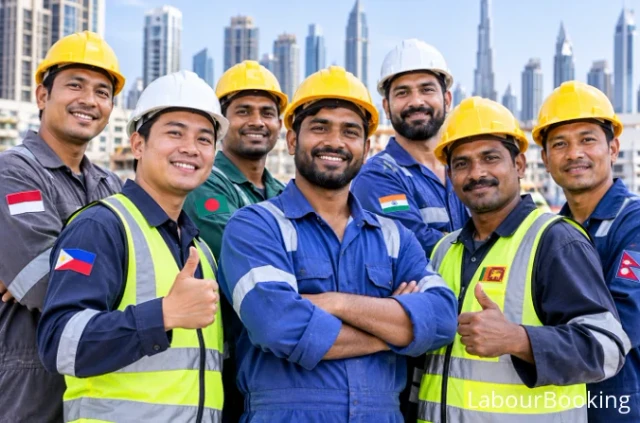
India, Bangladesh, Pakistan, Nepal, the Philippines and Sri Lanka are amongst the essential countries of origin for migrant workers in the Gulf. Employment patterns vary according to job-related requirements, employer demand, migration guidelines and bilateral work arrangements.
Nevertheless, gauging foreign worker statistics employment throughout the GCC needs mindful focus to analytical differences. National authorities release various indications, consisting of signed up workers, private-sector work records, social-insurance enrollments and active work permits. International migrant-stock quotes measure a more comprehensive populace and ought to not be treated as equivalent to work statistics. Consequently, a single combined GCC workforce figure may be misinforming without consistent meanings and recommendation dates.
GCC governments have presented labour-market reforms covering employment authorisations, worker flexibility, wage defense, recruitment methods and workplace conditions. Nationalisation programs additionally urge greater involvement of citizens in private-sector employment while maintaining accessibility to worldwide ability.

International workers stay essential to the economic development and labor force ability of GCC nations. Their payments expand throughout building and construction, facilities, manufacturing, transportation, friendliness, health care, residential services and professional sectors. Federal governments are motivating better nationwide participation and investing in labor force development, worldwide employment continues to address important work and skills requirements. The future of GCC economies will depend on balancing financial development, labor force nationalisation, global skill recruitment and stronger protection of migrant workers. An efficient and rather managed international labor force will certainly continue to be a vital foundation for the region's lasting advancement.

